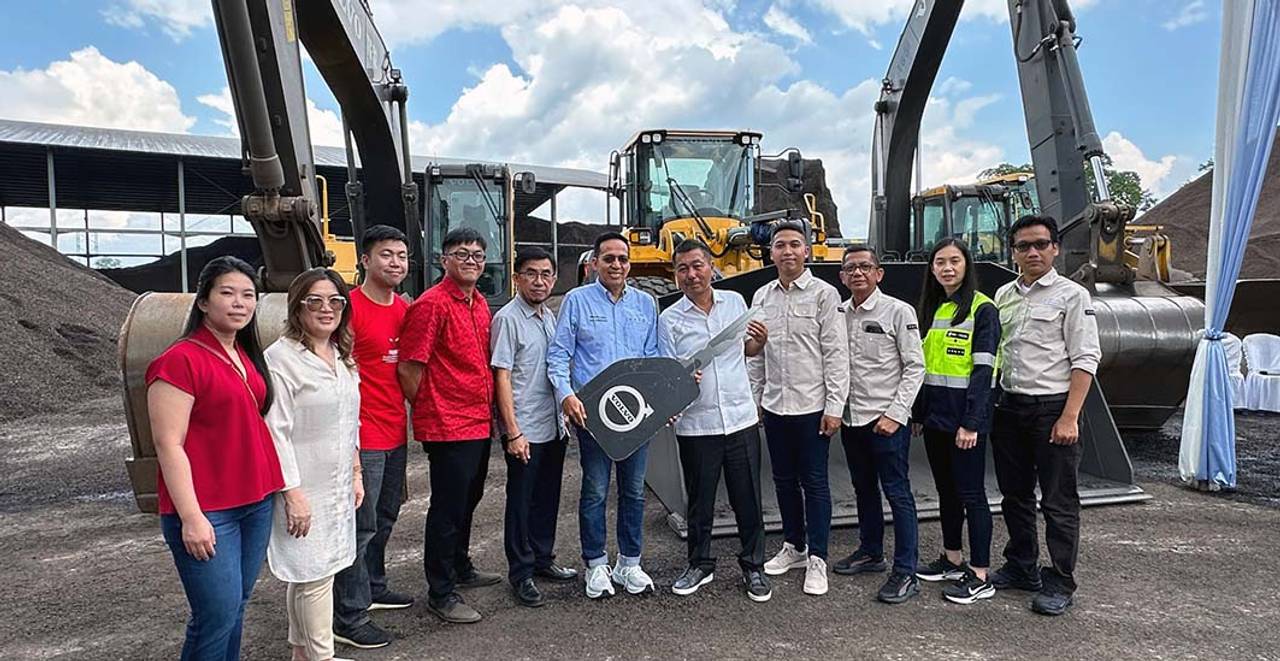

Volvo Construction Equipment (Volvo CE) has marked another milestone in Indonesia with the delivery of the country’s first L120 Electric wheel loader. On 1 December 2025, the company’s local dealer – PT Indotruck Utama (ITU) – officially handed over the machine to PT Tegas Guna Mandiri, signalling the first deployment and operation of a Volvo CE electric wheel loader in the Indonesian market.
The handover builds on Volvo CE’s continued commitment to driving sustainable construction in Indonesia, following earlier initiatives such as the country’s first L25 Electric trial and the launch of the ECR25 Electric compact excavator and the L25 Electric compact wheel loader in 2023. Together, these milestones reflect the company’s long-term ambition to support customers in reducing emissions while maintaining high levels of productivity and operational performance.
PT Tegas Guna Mandiri operates across the mining and plantation sectors, with a strong focus on port logistics and stockpile management in the Jambi area. The introduction of the L120 Electric aligns with the company’s focus on operational efficiency and its growing emphasis on environmentally responsible practices in demanding industrial applications.
“The delivery of the first L120 Electric in Indonesia is a significant step forward in our electrification roadmap for the market,” said Erwin Budi, head of market Indonesia and Timor Leste at Volvo CE. “It demonstrates our commitment to supporting Indonesian customers with solutions that reduce environmental impact while delivering the performance, reliability and safety they expect from Volvo CE. This milestone also reflects the growing readiness of customers to adopt electric machines as part of their sustainability journey.”
For ITU, the delivery underscores its role in enabling the adoption of advanced, low-emission technologies across Indonesia. “We are proud to support the first operation of an electric wheel loader in Indonesia. This handover is not just about introducing a new machine, but about helping our customers transition towards more sustainable and efficient operations,” said Tjong Bie, CEO of ITU. “We see this as the beginning of a broader shift in how the industry approaches productivity and sustainability.”